
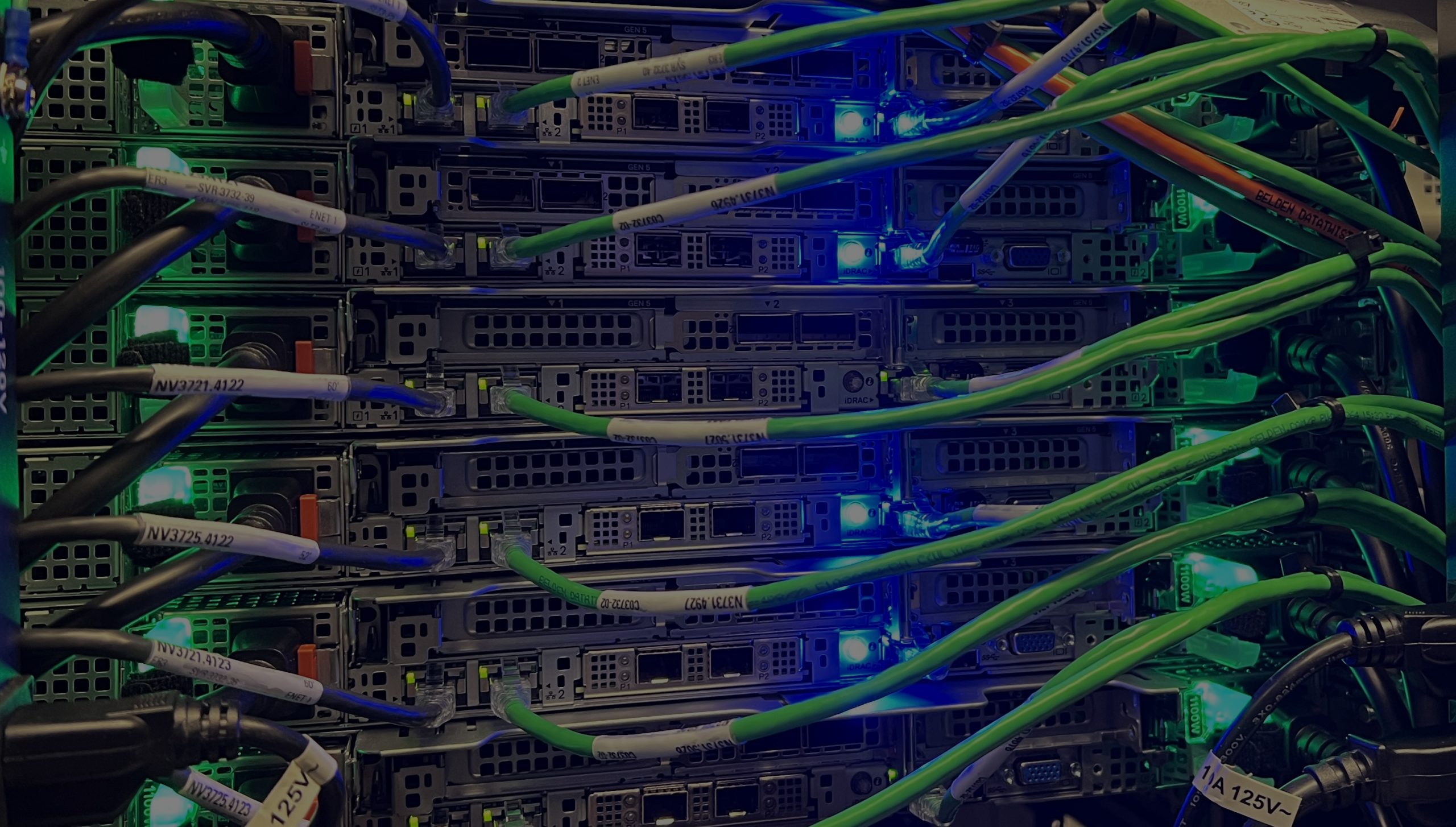
A major sports venue in New York City set out to modernize its broadcast infrastructure after more than a decade of relying on a traditional SDI router. While the existing system had been reliable, it lacked the flexibility and scalability required for today’s IP-based production workflows. The venue needed a cost-effective path to SMPTE 2110 that would support future UHD/HDR demands, without interrupting live operations. The CineSys team designed and delivered a fully redundant, high-density IP routing environment built around Lawo’s HOME ecosystem including a 200+ screen COTS based LAWO multiviewer platform and Nvidia 400G switching. The result is a modern, scalable broadcast plant that positions the venue for the next decade of production.
Client Challenge
The venue faced several converging challenges:
- A legacy SDI router past end-of-life
- Increasing demand for IP-based and remote workflows
- Limited expansion capability in the existing system
- Separate technical locations that needed to operate as one
- A requirement for zero downtime during the transition
- Aging SDI cabling and legacy AES/analog audio infrastructure that needed Dante bridging
The goal was to implement a modern SMPTE 2110 environment that delivered flexibility, redundancy, and long-term value, while staying within a realistic budget.
Our Approach
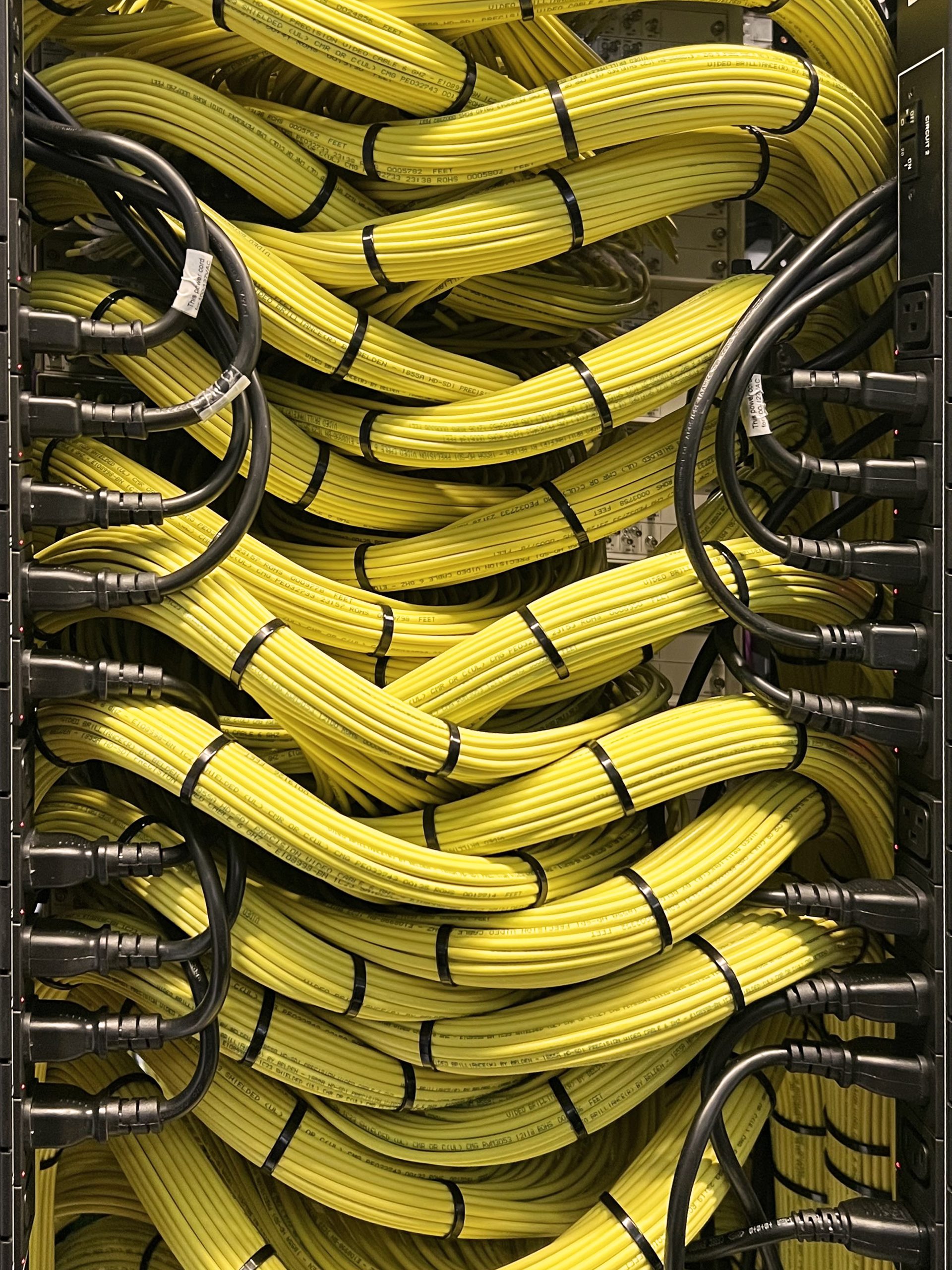
We proposed a distributed, high-density IP routing architecture that delivered the performance of a large router while remaining modular and cost-efficient. The design centered on Lawo Edge gateways, a fully redundant spine-leaf network, and a flexible multiviewer platform capable of supporting both SMPTE 2110, SDI, and NDI. This approach allowed the new system to be built in parallel with the existing SDI router, ensuring uninterrupted operations throughout the project.
Solution Highlights
High-Density IP Gateway Layer
To maximize I/O density and control costs, the routing core was built around:
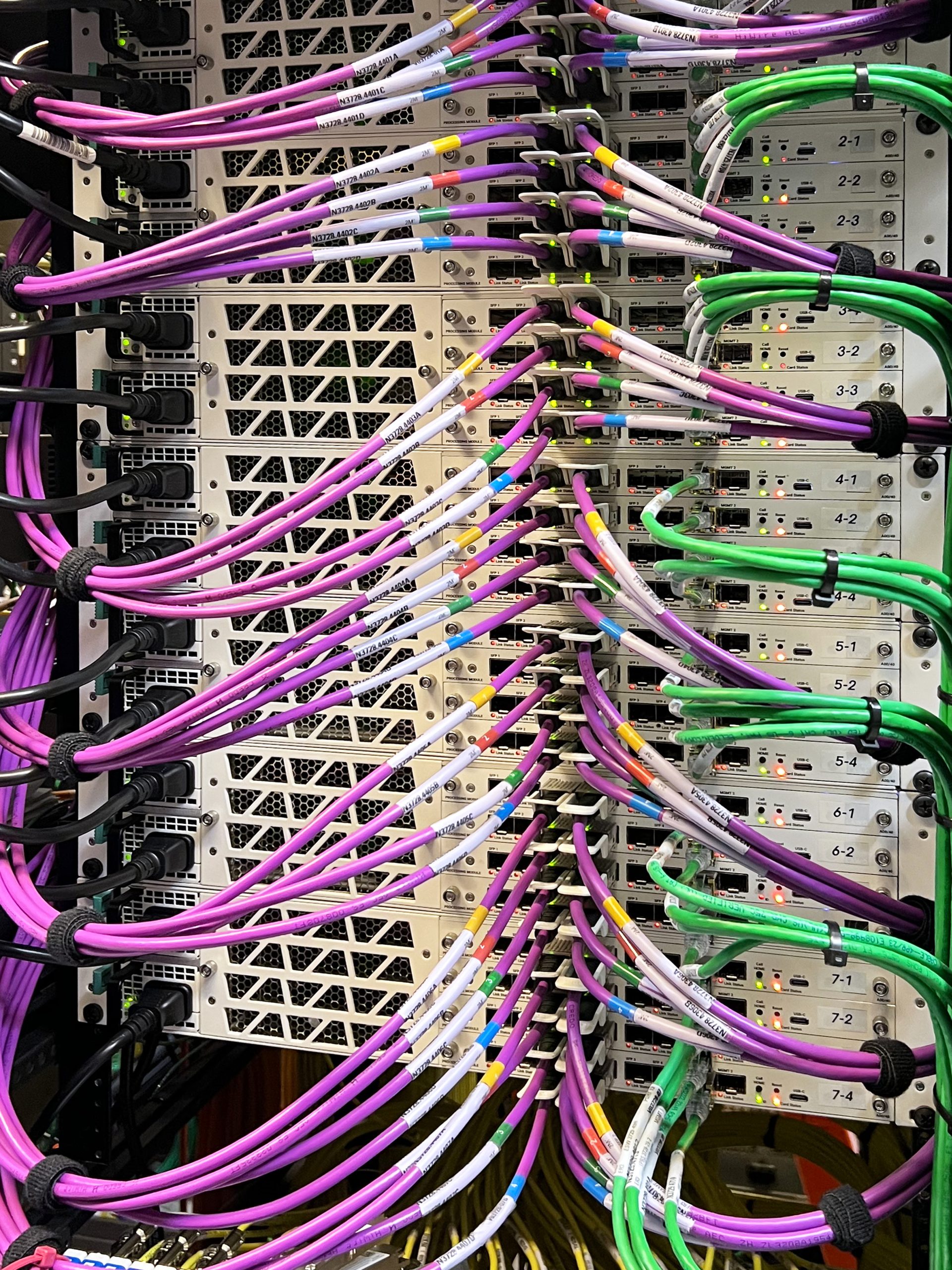
• 12 x Lawo Edge 2RU frames each equipped with 4x24x24 SDI/IP hyper-density gateway cards
• 96×96 per frame, totaling 1152×1152 unique crosspoints
This provided the venue with a powerful, flexible routing fabric without the footprint, or expense of a traditional IP router chassis.
Red/Blue Redundant IP Network
A fully redundant spine-leaf network ensured reliability and scalability.
- Nvidia SN4700 (32-port 400Gb) spine switches
- Nvidia SN3420 (48-port 10/25Gb with 100Gb uplinks) leaf switches
Inter-venue connectivity was handled through Credo HiWire P3 patch panels, paired with AEC 400Gb cables to provide high-bandwidth, low-latency links between the four technical locations. This architecture gave the venue a robust backbone capable of supporting future UHD and high-bandwidth workflows.
Scalable Multiviewer Platform
The venue required a large number of flexible, routable multiviewers. We delivered:
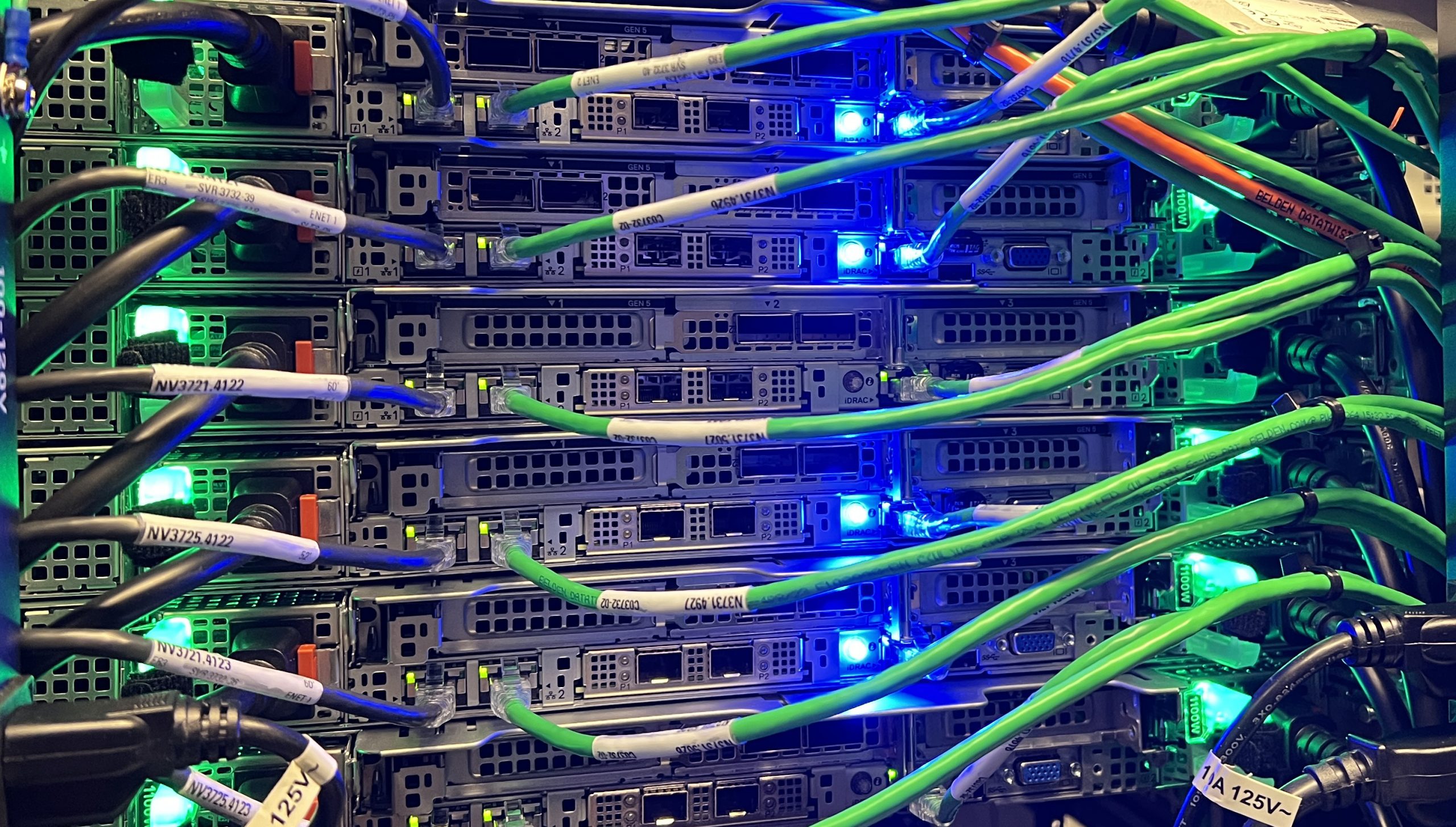
- 38 x Dell 1 RU servers running Lawo HOME multiviewer applications
- Dual 100Gb Mellanox NICs on Red/Blue networks
- 200+ multiviewer outputs, routable as 2110 or NDI
- Netgear M4300 switches for NDI distribution
- BirdDog and Magewell units for NDl-to-HDMI conversion
This distributed design allows the venue to scale multiviewers as needed without proprietary hardware limitations.
Unified Control & Orchestration
To simplify operations and improve workflow efficiency, CineSys deployed:
- Lawo HOME management servers (with redundancy)
- Lawo VSM and Gadget servers (with redundancy)
- Lawo 51-button router panels throughout the venue
Operators now have a unified interface for routing, labeling, tally, and device management, reducing complexity and improving response time during live events.
Audio Modernization
The venue’s legacy AES and analog audio systems were replaced with a modern Dante-based infrastructure:
- Lawo Power Core DSP engines with modular I/O
- Dante interface cards for seamless integration
- Netgear M4300 switches dedicated to Dante routing
This shift simplifies cabling, improves flexibility, and aligns the venue with current audio standards.
Timing, Sync & Monitoring
Accurate timing and reference were ensured with:
- 2 x Telestream SPG9000 sync generators (GPS-locked)
- 1 x Telestream ACO for automatic failover
- Telestream Prism for 2110/SDI monitoring and diagnostics
Physical Layer Refresh
The project included:
- Replacement of 14-year-old SDI cabling
- Installation of high-density Canare jackfields
- Removal of legacy AES/analog audio cabling
This ensures long-term reliability and reduces maintenance overhead.
Implementation Strategy
To maintain uninterrupted broadcast operations, CineSys followed a phased migration approach:
Results & Impact
Operational Benefits
- Fully redundant SMPTE 2110 routing core
- Dramatically expanded routing capacity
- Unified control and orchestration
- Scalable multiviewer platform supporting 2110 and NDI
- Modernized Dante-based audio infrastructure
Business Value
- Future-proof investment aligned with industry standards
- Reduced long-term maintenance costs
- Improved operational efficiency
- Flexible architecture that can scale with new production demands
Strategic Positioning
The venue is now equipped to support:
- UHD/HDR production
- Hybrid IP/NDI workflows
- Remote and cloud-assisted production
- Expanded multiviewer capacity
- Advanced monitoring and analytics
Conclusion
This project demonstrates how a major venue can transition from a legacy SDI environment to a modern SMPTE 2110 infrastructure without operational disruption. By combining high-density gateways, a resilient IP network, and centralized orchestration, the venue now has a flexible, scalable platform that supports today’s workflows and tomorrow’s innovations.
The result is not just an infrastructure upgrade, it’s a strategic investment in the future of live sports production.