From hours of logging and tagging content to minutes.
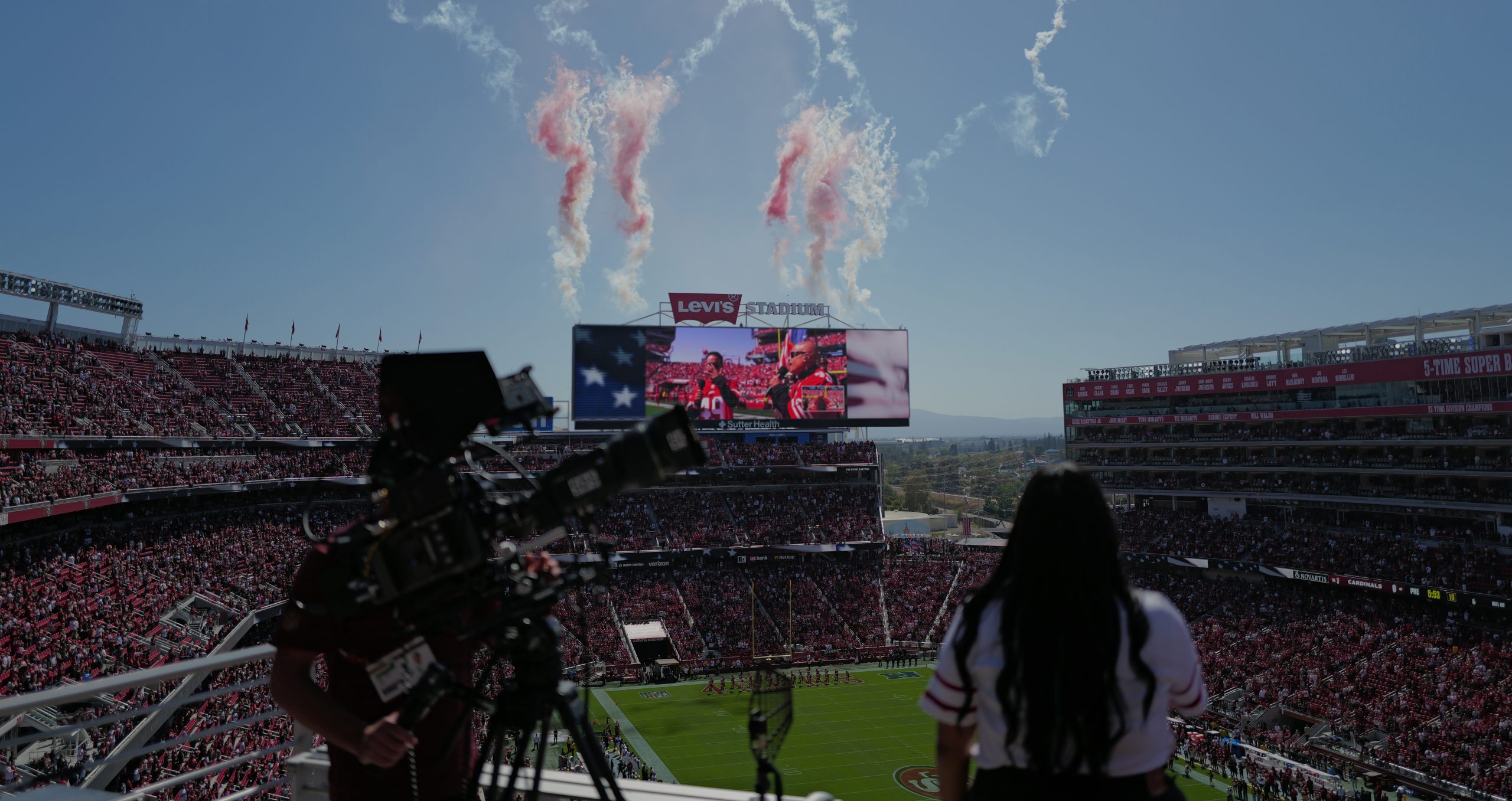
The San Francisco 49ers are a professional American football team based in Santa Clara, California, competing in the NFL. 49ers Studios, the team’s in-house media, television, and digital production arm, faced a growing challenge managing its increasing volume of content. Much of its practice and game footage was difficult to find because it hadn’t been properly logged or tagged. CineSys helped transform 49ers Studios' media workflow with Spotter for automated content tagging, Iconik for media access and review, and LucidLink for remote editing and collaboration, making it much faster and easier to find, access, and work with footage when it matters most.
Project Outcome
The Team
Please tell us about yourself and the content management team?
I’m Josh Conner, Head of Content Management for the San Francisco 49ers. Our content management team is part of 49ers Studios. We ingest all of the game content captured by the team and make sure that it’s all tagged, logged, distributed, and ready for editors to use in our weekly content series. We also capture practices, off-the-field and on-the-field content of the players, as well as foundation and public relations events. Our main role is to put out content on our website, YouTube, and social media channels.
On the content management side, we are focused on making sure that everyone on our team internally has access to all the footage, is able to search and find it quickly, as well as distribute it across the organization. That includes our PR team, our community relations team, our game-day entertainment teams, and our foundation teams. Partnerships might ask for B-roll, or our community relations team could ask for a recap of an event. As the content managers, we make sure that all of that is executed in a timely manner. We also work externally with multiple teams, like news agencies, NFL Films, and NFL Network to share and receive content that we’ve captured with them. And we make sure that it’s all properly logged and tagged so that it can be used by our editors.
The Challenge
What prompted you to consider moving away from your previous solutions?
Before working with CineSys, we were experiencing issues with the large volume of content we had coming in, as a lot of it was not getting logged and was hard to find. A big thing that CineSys helped us with was the ability to tag and search that content, as well as to find it remotely. We didn’t have to be on premises to edit or access it. They also helped us massively in transferring our archive, getting it all digitized and easily accessible.
We were prompted to move off of our previous solutions for a couple of reasons. One was access. The solutions we had were only accessible if we were working on-premises. We had no way to access all of the data off-site, so one of the key things with moving to Iconik was being able to view everything over the web from wherever we were, whether that’s on a road game in Australia or somewhere else. Our previous solution also felt a little outdated, like you needed a degree just to work with it. It wasn’t the easiest thing for all of our editors and shooters and producers to search through the footage, or tag it, or to access the program. The switch to Iconik made it much easier for everyone.
The Integration
How was the migration and implementation process?
It was a lengthy process due to the amount of tape archive that we had and how old that tape archive system was, but it went very smoothly. CineSys was able to handle it all in the background. They were chugging through tape by tape while we were still doing our daily responsibilities, so it worked out great, and it was something that we were able to get started and then not have too many distractions while it was happening. The migration didn’t stop us from our current work. If anything, I would say that it enabled us further because we were dealing with a lot of footage in a lot of different places that wasn’t accessible. A lot of it was on LTO tape storage that we couldn’t access without restoring it from archive. It was nice because as CineSys worked through the process of transferring all of that off of the storage, we slowly started to get back all of that old archive footage that we previously had not been able to access. So if anything, it didn’t affect our workflow; it enhanced it.
The MAM
Which feature sets for Iconik have made your life easier?
There are multiple ways that Iconik has improved our workflow. One of them being access across any location, being able to view all our footage, and to transfer that footage from our on-prem servers or our LucidLink servers to separate cloud servers. We can transfer back and forth from our on-prem NetApp servers to LucidLink and vice versa. Just the access from wherever we’re at has been a massive boon for us. This season, through CineSys, we have started to use Spotter, which is automatic tagging of our practice footage and our game footage. One of the really cool things about that is that it uses the game book that the NFL produces after our games. Through that game book, it is automatically tagging our shooters’ clips. Before, that was probably four to five hours for a shooter to come in and tag all of their footage with what the play was. Now, it’s a matter of minutes. Once we get the game book in, we are setting Spotter to review that collection. It is sending all that through and then doing it on its own.
”We're saving tens of hours every week of manual labor in tagging and making sure all of that footage is properly logged.
The Workflow
What limitations did you experience before using LucidLink?
Our remote workflows before LucidLink were pretty archaic. I would say they were in some ways non-existent. When the team was doing week-long trips for training camp, every separate shooter was filming and editing off an external hard drive, and then we made sure that once they got back to the office, we dumped all that to our servers. Anything that needed to be shared due to internet speeds, due to the capabilities that we had, would pretty much be cut down into a shorter B-roll package, exported, and then sent out over the internet. But we very rarely shared any raw footage. Most of it was just being edited locally and then uploaded to our servers once we got home.
The Collab
How has it changed the way the team works and collaborates?
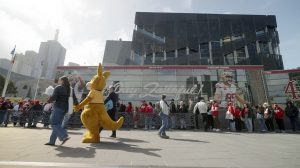
It’s been huge. LucidLink has been massive for our collaboration. It has allowed us to have editors back here at home while we’re on a road game or doing event coverage. We can send footage back to them to make their edits, to get that footage out, and just to have it on our servers. We can start getting it up into Iconik, where we can view it or send out B-roll packages. For example, we recently had a trip to Melbourne, Australia, where we played the Rams in Week One of the season. We were able to capture a massive amount of footage across the week of events, practices, sponsor events, and foundation events, and we were able to capture all that and share it back with those of us here at home in a matter of hours instead of waiting the entire week for everyone to get back from Australia.
”We captured over 50 hours of footage across 5,000 clips just that week alone.
The Support
How has your experience working with CineSys been during this project?
CineSys has been very good at getting back to us immediately whenever we have an issue. One of the things that’s been great about working with CineSys is they are a communication between us and our IT team. There is almost a different language that people in production speak versus people in IT. The nice thing is that CineSys speaks both those languages and can marry those together and really get the production workflows that we need.
Working with CineSys has been amazing. I feel like sometimes you can get to the point where you get the responses you need when a company is implementing something and then they kind of go radio silent. That has not been the case with CineSys at all for us. They have been very quick to respond, very quick to resolve issues, and very quick to provide solutions sometimes that we never even thought of. I feel like in some ways, in the past couple years, we’ve gone from living in the early 2000s in terms of content management to now living in 2026 and in some ways living in 2030. Just the implementation of all the different technology that we are now utilizing to make our jobs easier has been incredible.
The Result
Looking back at the project as a whole, what has improved most?
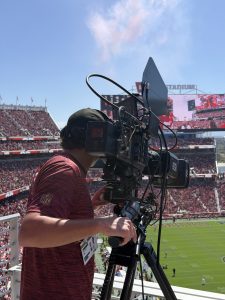
CineSys, LucidLink and Iconik have really allowed us to modernize our workflow. It has allowed us to move off of external hard drives. Before, I felt like we were very siloed. Not everything was easy to find and we were relying on hard drives. Shooters were coming back with hard drives and we had to make sure it all was dumped. Sometimes footage would get forgotten and drives would get erased before they were ready. Now, we have much more visibility into everything we capture, as well as the ability to work from anywhere, and to see that footage as it comes in. A shooter can go out and shoot an event and upload that footage within a matter of minutes and have everyone back on the team be able to edit that footage, and get it to our on-prem drives as well. Just the capabilities that these programs have allowed us to achieve have been amazingly efficient.