
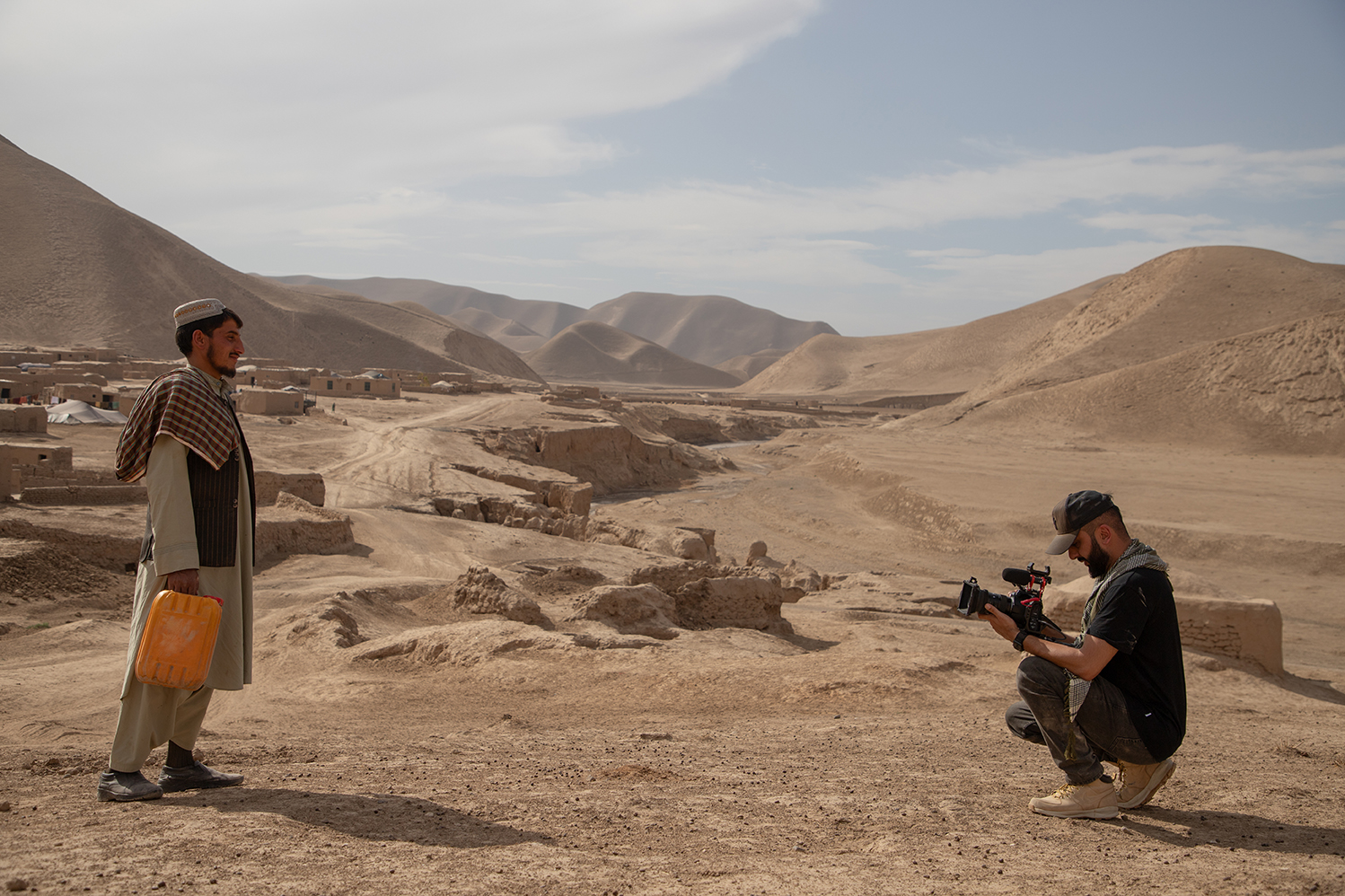
The International Rescue Committee (IRC) operates in more than 40 countries and in 26 cities across the United States, helping people affected by humanitarian crises survive, recover and rebuild their lives. The organization works to restore health, safety, education, economic wellbeing and power for those devastated by conflict and disaster.
We spoke with Chad Clendinen, Associate Director of Visual Storytelling, who leads the post-production and creative agency departments at the IRC. Chad shared insights into the remarkable work the organization is doing in major conflict zones around the world and explained how they have incorporated the cloud storage platform Storj, along with LucidLink and Iconik, so their teams can easily share, access, and view content globally.
Sharing materials from disaster zones with limited infrastructure and extremely slow upload speeds is no easy task, but the combined solution provided by systems integrator CineSys has transformed the way the team works and saved the organization a tremendous amount of time.
Please share a bit about your role at IRC and what your team is working toward.
IRC stands for International Rescue Committee. It’s a 90-year-old organization that was first started by Albert Einstein during the refugee crisis of World War II to help people escape Nazi-occupied France. Our mission is built on three pillars: helping people survive, recover, and rebuild their lives in areas affected by war, conflict, or disaster. We’re currently operating in major conflict zones, such as Ukraine, Gaza, and Sudan, as well as responding to significant earthquakes in Afghanistan. IRC is well known for being a big resettlement agency for asylum seekers and refugees in both the US and Europe.

My department focuses on creative and content services. One half functions as a creative agency, handling in-house projects and hiring external agencies. The other half oversees the collection of all content used across the organization and by our partners. Our team manages the Data Asset Management (DAM) system that distributes this content. I lead the post-production and creative agency side, while my colleague leads the content production side. We work very closely with the system, and with vendors and colleagues around the world. We send and receive content from places like Ukraine, Gaza, Pakistan, and many other regions globally.
That's the amazing part, you’re able to work across the globe from anywhere. And now you use cloud storage platform Storj. How did you come across the product, and what led you to try it out?
I didn’t know about Storj until we were building the system with CineSys. I was familiar with other cloud services for storage and backup, but because we’re a non-profit with a very limited budget, securing funding for proper backup solutions was difficult. That’s when Matt Tape from CineSys introduced us to Storj.
Storj allows you to have data across multiple locations, which is so different from other providers that require you to choose and commit to a specific data center. With other cloud services I would select a data center for our US offices, but then my colleague in Iraq would experience terrible upload speeds. For a global team, it was very intriguing to not have to choose a single data center.
We told CineSys we needed a system that would work for any editor, vendor, or videographer anywhere in the world, assuming they have a decent internet connection. We needed that level of flexibility because we are an emergency response organization, and our ability to move footage in and out of countries quickly directly affects how much funding we can raise to act and help people in these locations.
What type of storage did you use before, and what were some of the key challenges you were facing?
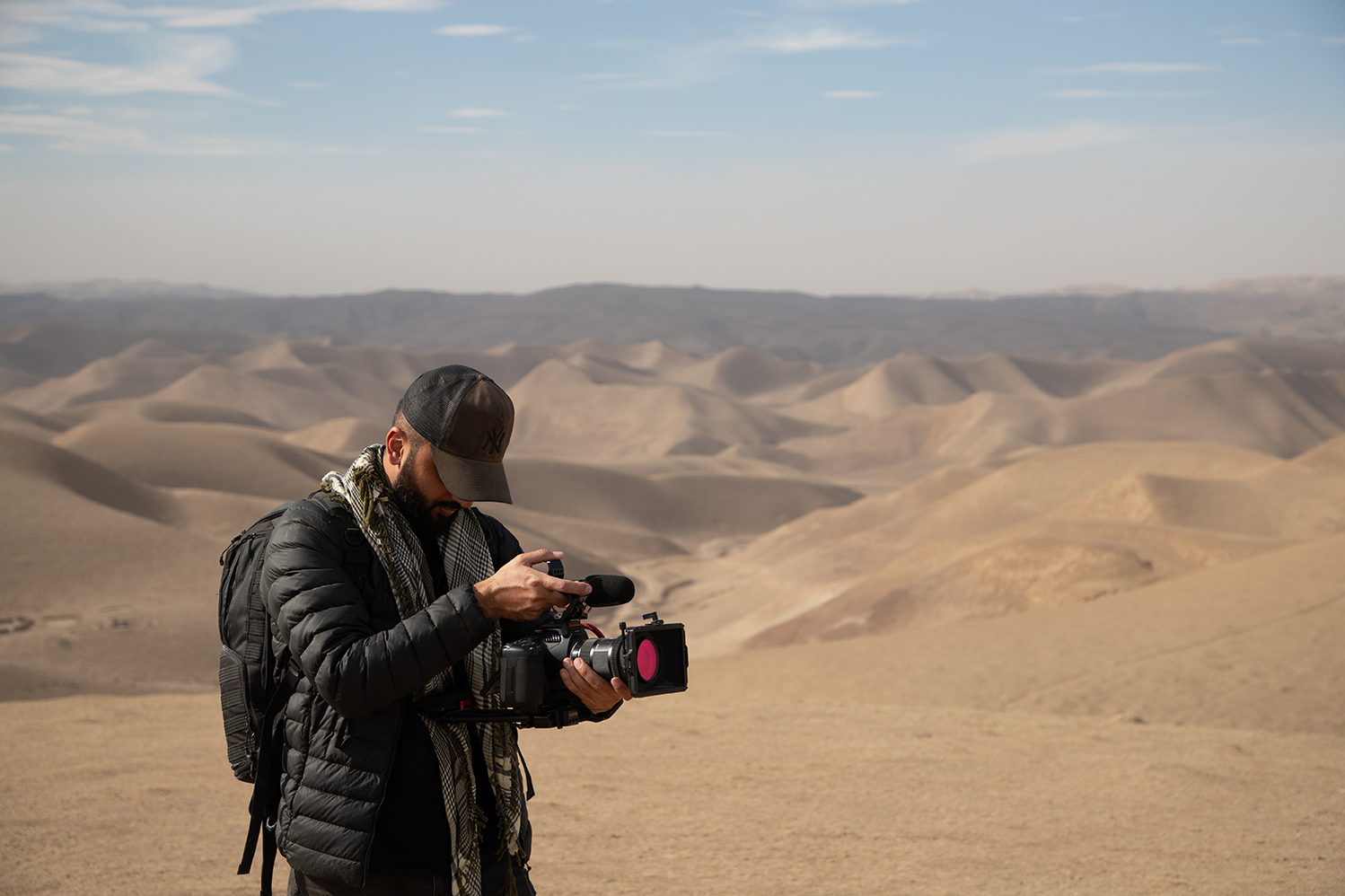
Before I started at IRC, our video production workflow was mostly on-premises. We had what I call the “reactive system,” which is like AP or Getty. For example, a vendor might go shoot footage and put together a B-roll pack or photos. I thought it was such an amazing well-oiled system; it worked and served the market. However, this was after the COVID pandemic, and we still had the server and the office in New York, I was in Austin and couldn’t access the raw footage. I only had a miniature server sitting on my desk. We had editors and staff traveling, shipping hard drives all over, and the single source of true raw footage was in New York. So, whenever we had a big event, or had to color grade something, it was such a nightmare.
When we finally moved all the data onto Storj, LucidLink, and Iconik, it was a giant leap forward compared to our old workflow. Some of the creative projects we’ve done this year, which helped raise substantial funds, would’ve been unimaginable before; both because of the amount of time wasted and the headaches involved. We needed a solution yesterday. I just wrapped a big, multi-million-dollar fundraising event, and the quality of the creative work we did was amazing. It wouldn’t have been possible before. A freelance editor in LA was onboarded into the system and worked seamlessly with our internal editor. Last-minute footage requests were uploaded from Ukraine and backed up. The execution was pretty flawless, especially when you think of where we were a year or two ago.
And LucidLink is very easy that way. It's easy for people to learn very fast.
It is, yes. At first, we planned to use LucidLink for all our content, then Iconik would process and scan it, and Storj would serve as the archive. But everything worked so well that we’ve expanded how we use it. For big projects, we now have a folder on LucidLink that our producers can collaborate on onsite, something we never imagined before. Initially, we only used Storj for archiving, but we didn’t feel safe relying on LucidLink as the only backup. So, we started backing up to Storj automatically as well. One benefit of this is when I work with a vendor who can’t download raw assets from LucidLink due to access restrictions, Storj makes it easy. I just provide a share link and they can download and start to edit right away.
Another advantage is that we can share upload links via Iconik. Vendors can upload to Storj through Iconik, and we can then download and organize everything. I’ve done this in Gaza and Pakistan for vendors who didn’t have access to reliable cloud services to upload. That wasn’t even on our wish list when we started building the system.
How was the process of adopting and integrating Storj?
Honestly, Storj has been incredibly seamless, there haven’t been any issues. I just tell the CineSys team: “Hey, I want to do this,” and they onboard it, connect it, and make everything happen. I have no complaints, it’s great. I didn’t even know the technical specifications of the system; CineSys just explained why we should use it, and it works. I don’t need to know more. Iconik and LucidLink are a bit more complex, and I need to understand the technology to leverage them fully for our team. Storj just works, it does its thing.

If we ever break it, it would probably be due to uploading from different locations around the world, because we’re always dealing with varying internet speeds and connections. But even so, we’ve drastically reduced the need to ship hard drives. When you work globally like we do, you need multiple options for when the situation has deteriorated. We film in some of the most challenging locations in the world, and getting content out of those areas is very difficult.
Having worked with CineSys as your systems integrator for many of the products in your workflow, what was the integration, training and support process like?
The integration itself was great. Migration is always challenging, especially when dealing with messy data. The CineSys team helped fix files and correct bad file names. Once that was done, we turned on LucidLink first, then rolled out Iconik, gradually onboarding the team. CineSys has always been there to support us. Whenever I ask for something beyond the standard scope, they guide me in the right direction; like how to set up API connections for translations through Iconik. I’ve told CineSys that my team needs refreshers and has questions, so we’re working on a training series to help them get more familiar with the products.
”That has been such a big deal for us. Technology is always changing, and you have to adapt with it, but finding the right partner to help you make those changes, without taking time away from your team, has been huge. We couldn't do it without CineSys' support and their role as the connection to Storj. When I worked at a smaller organization, I tried to build an Iconik system on my own, and it took so much time away from being creative and making videos. Having that support is a true “can't-do-it-without-them” kind of thing.
Chad ClendinenAssociate Director of Visual Storytelling, IRC
What advice would you give to companies in similar situations, where they're shipping hard drives back and forth and trying to find a better storage solution?
I was recently advising a friend who has a similar role to mine at a large organization, and my number one advice is to find someone who can support you, not just with the technology, but through a true partnership. In five years, you might decide that LucidLink or Iconik is no longer the right fit, and you’ll need someone to help guide you to whatever come next. So don’t marry your technology; marry your technology partners.
It’s also important to stay flexible and open to what’s out there, and to be willing to invest a little more than you initially expect to get the right solution. You have to think about the downstream impact and the cost of not doing it correctly. Especially in the non-profit world, people often try to do everything themselves, because they think it saves money, but it usually ends up costing more in the long run.
In the non-profit world, it also helps to understand that by spending money on the right technology, you’re actually taking care of donor funds because you’re saving time and improving workflows for your team. What we have now is light years ahead of where we used to be. I even demo it to friends, partly to make them a little envious, but mostly to see what’s possible today in production workflows.
Name: Chad Clendinen
Title: Associate Director of Visual Storytelling, IRC
Company: International Rescue Committee (IRC)
Location: Austin, TX
About Storj
Storj delivers a fast unified cloud solution designed for global media, AI and creative workflows. Combining distributed storage, advanced compute, and cutting-edge file access, Storj delivers a unique platform that powers efficiency and innovation to operate on a global scale.