
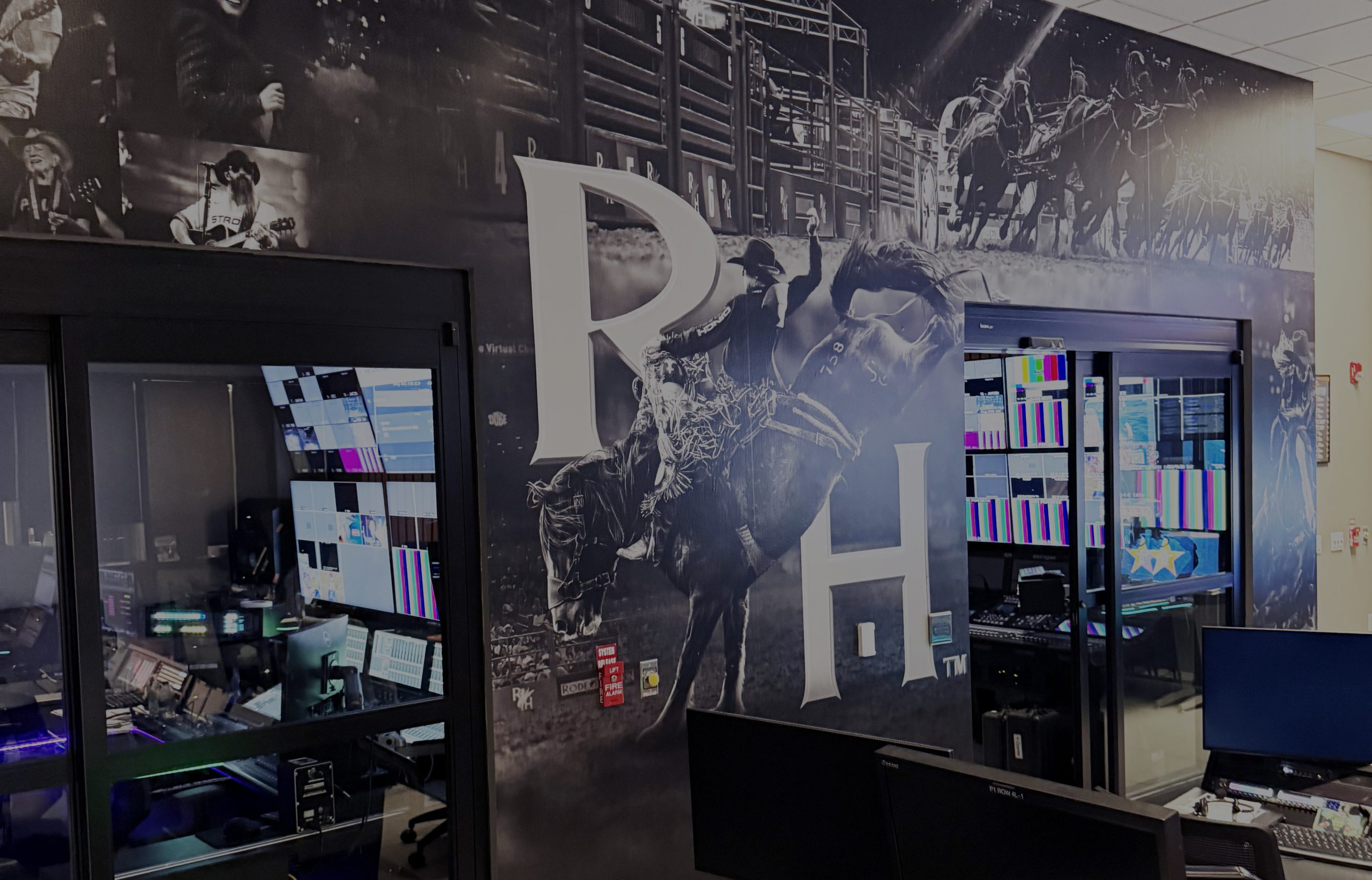
The Houston Livestock Show and Rodeo (HLSR) promotes agriculture by hosting an annual experience that educates and entertains the public, supports Texas youth, and provides year-round educational support within the community. Drawing more than 2.7 million attendees each year, the event is one of the largest recurring live events in North America.
To support an event of this scale, the CineSys Network Solutions team implemented a facility-wide solution to modernize and streamline the entire venue, including the NRG Stadium scoreboard. Working closely with Rodeo IT, County IT, and Texans IT, they integrated a reliable, future-ready network that now supports over 50 unified switches, 192 VLANs, and more than 40,000 endpoints.
Key Challenges
CineSys brings deep expertise in integrating and supporting complex media and broadcast workflows. The team has delivered tailored solutions for major professional sports organizations across North America and works closely with both the Houston Livestock Show and Rodeo (HLSR) and the Houston Texans.
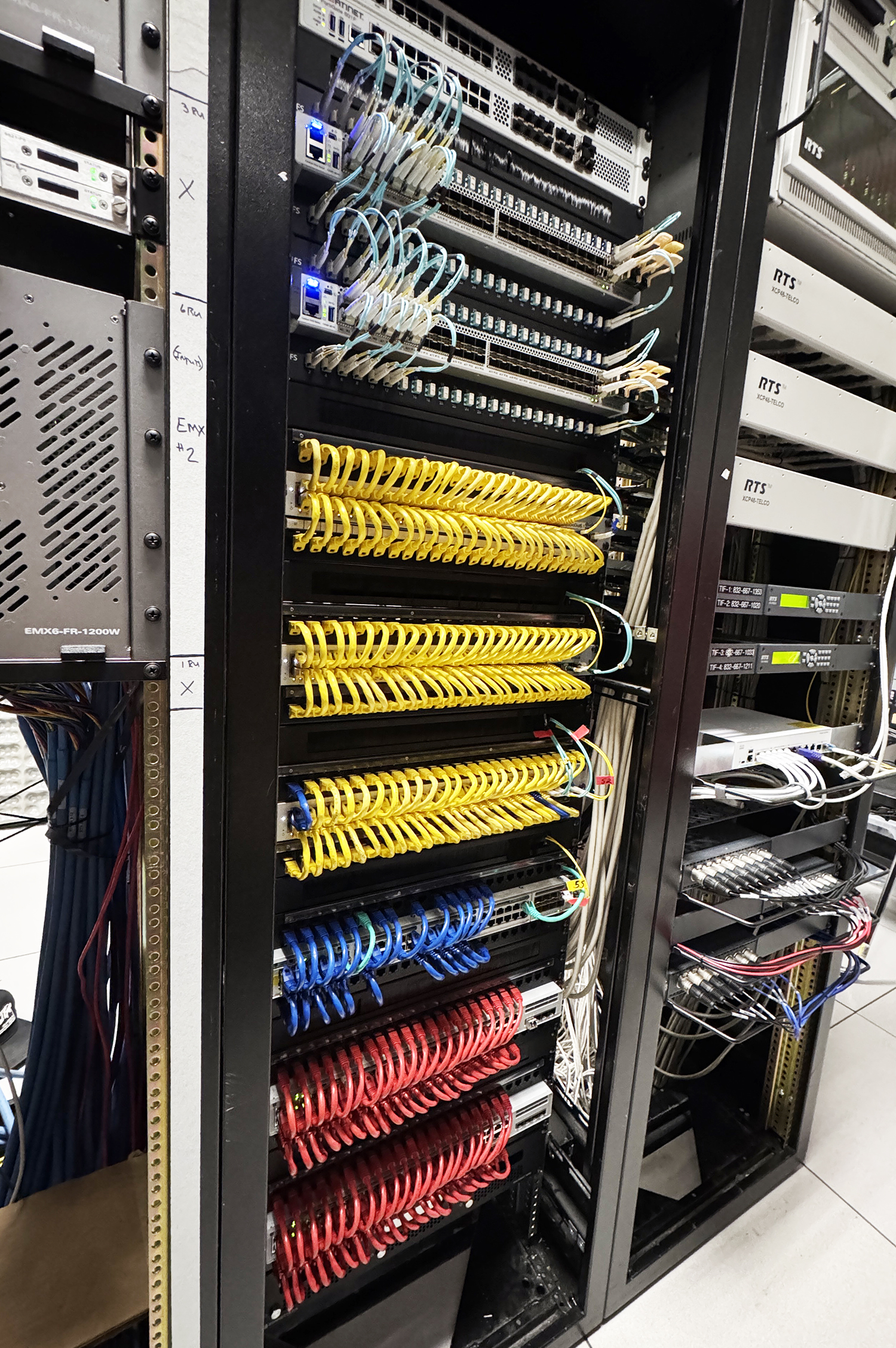
The CineSys team was challenged to design and implement a routed broadcast network architecture capable of supporting the demanding requirements of large-scale live production. Initially, the HLSR faced an undocumented, aging Broadcast IT infrastructure. Years of network wiring lacked proper documentation and management, and the environment relied on a mix of end-of-life HP, Netgear, and Dell switches. To meet growing operational demands, the Rodeo required a comprehensive solution to modernize and upgrade the entire network.
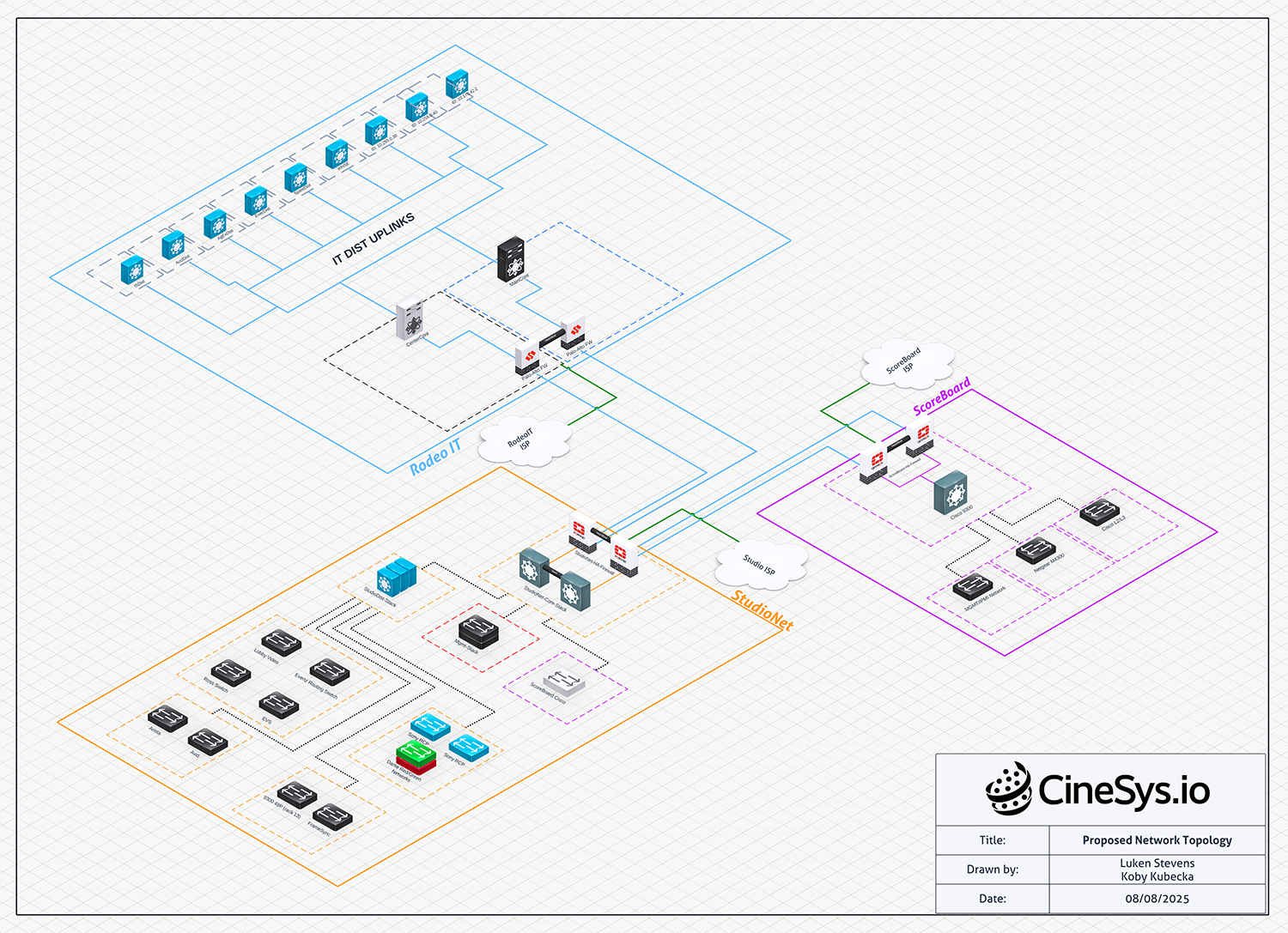
What made this project uniquely complex was that NRG Stadium is shared by three separate organizations: HLSR, Houston Texans, and Harris County. Each has its own IT team, security requirements, and reasons not to have traffic coincide with another. The real challenge wasn’t just modernizing the infrastructure, but designing a network where all three could coexist in the same building, on the same infrastructure, without operational interference.
The Solution
CineSys deployed a routed campus network running OSPF across Cisco Catalyst and Nexus switching infrastructure, working in close coordination with Rodeo IT through the design and implementation. The architecture was engineered for the throughput and convergence demands of live broadcast production, with automatic failover built in from the ground up.
192 VLANs segment the broadcast network across dedicated domains covering studio, broadcast, scoreboard, and the broader facility. Each domain carries its own security policy with inter-domain routing enforced at the firewall. The endpoint environment spans the full broadcast stack: Ross production switchers, Evertz signal processing, EVS replay servers, PTZ cameras, and studio edit stations, all operating on documented, policy-controlled segments. Systems requiring cross-domain communication route through defined paths with no performance degradation.
In addition, object storage and tape-based archive tiers provide cost-effective, compliant preservation of production content. Metadata-driven retrieval ensures that any asset is fully accessible and recoverable on demand.
The Result
The end result is a fully documented, manageable infrastructure where every endpoint is known, every segment is defined, and every policy is enforced. When issues arise, the team has immediate visibility into exactly where the problem is and what it affects. There are no undocumented devices, no ambiguous traffic paths, and no guesswork. HLSR, the Houston Texans, and Harris County each operate independently on the same physical infrastructure with clean demarcation between domains. The network scales with the event, and performs optimally whether it’s during Rodeo season, NFL games, or county operations.
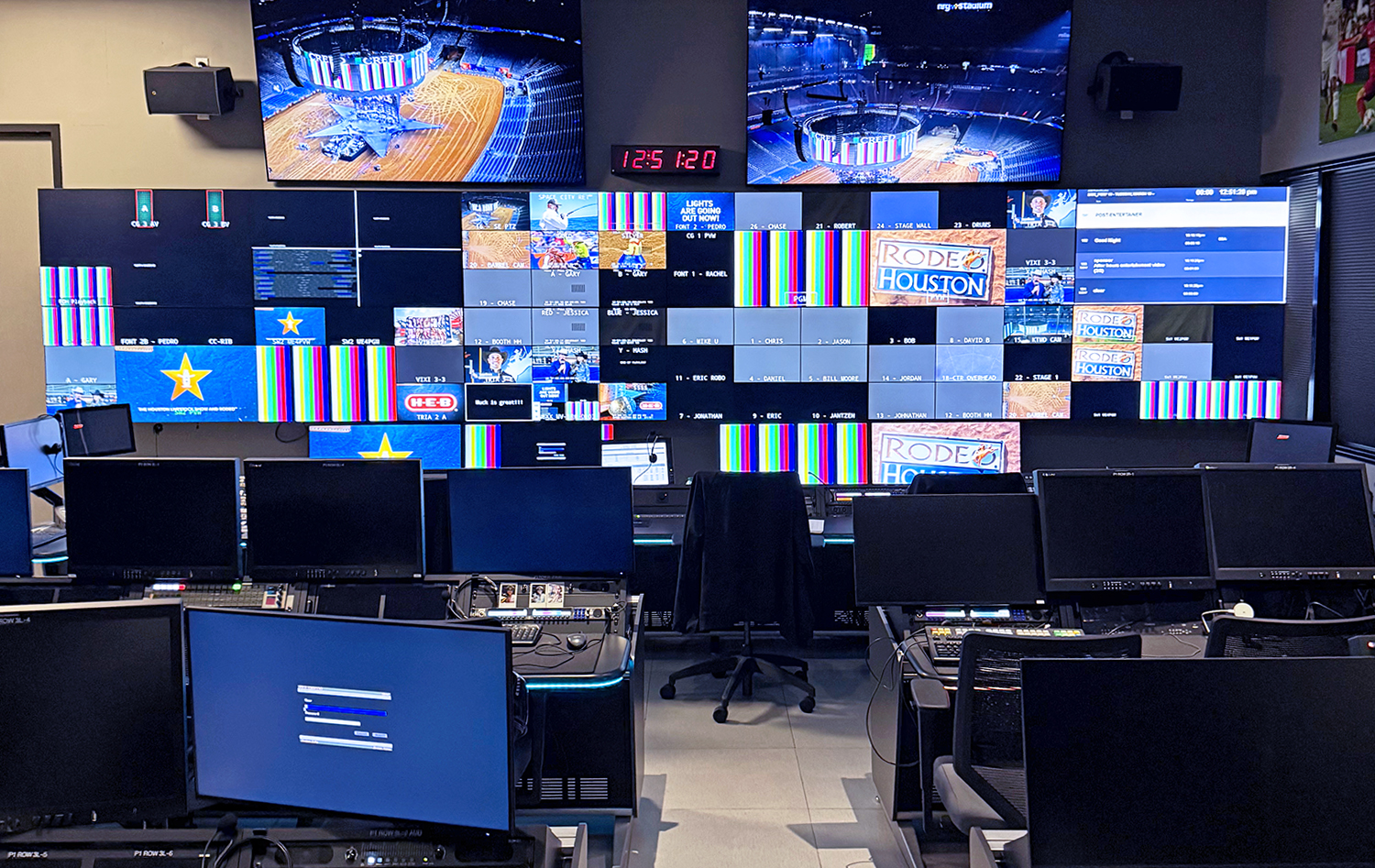
”The HLSR team couldn't be more thrilled with the outcome, highlighting improved efficiency, enhanced visibility, and a significantly more streamlined workflow experience.